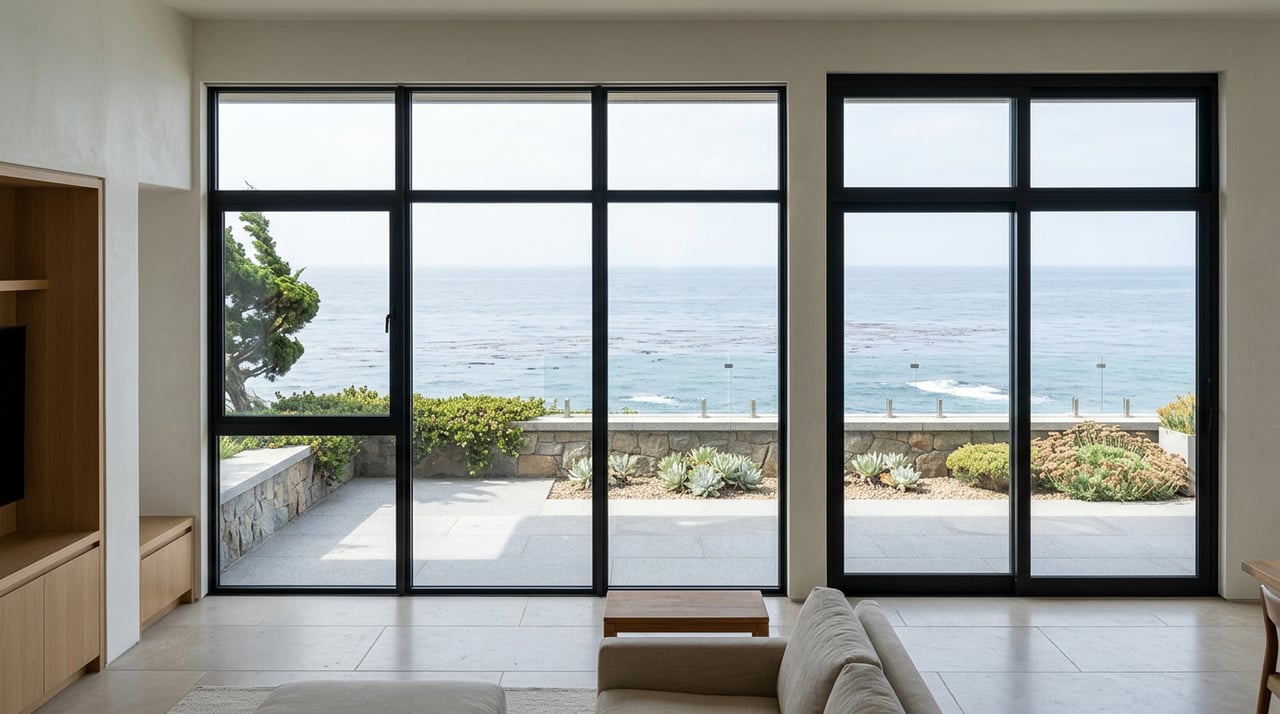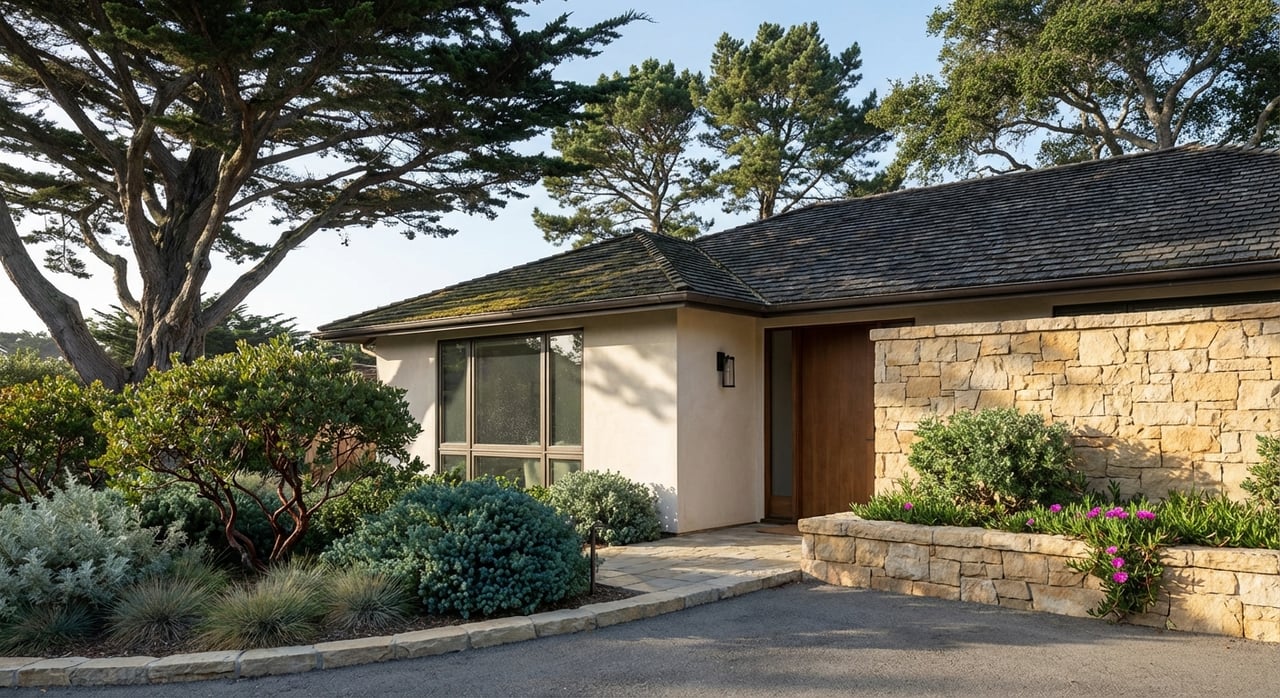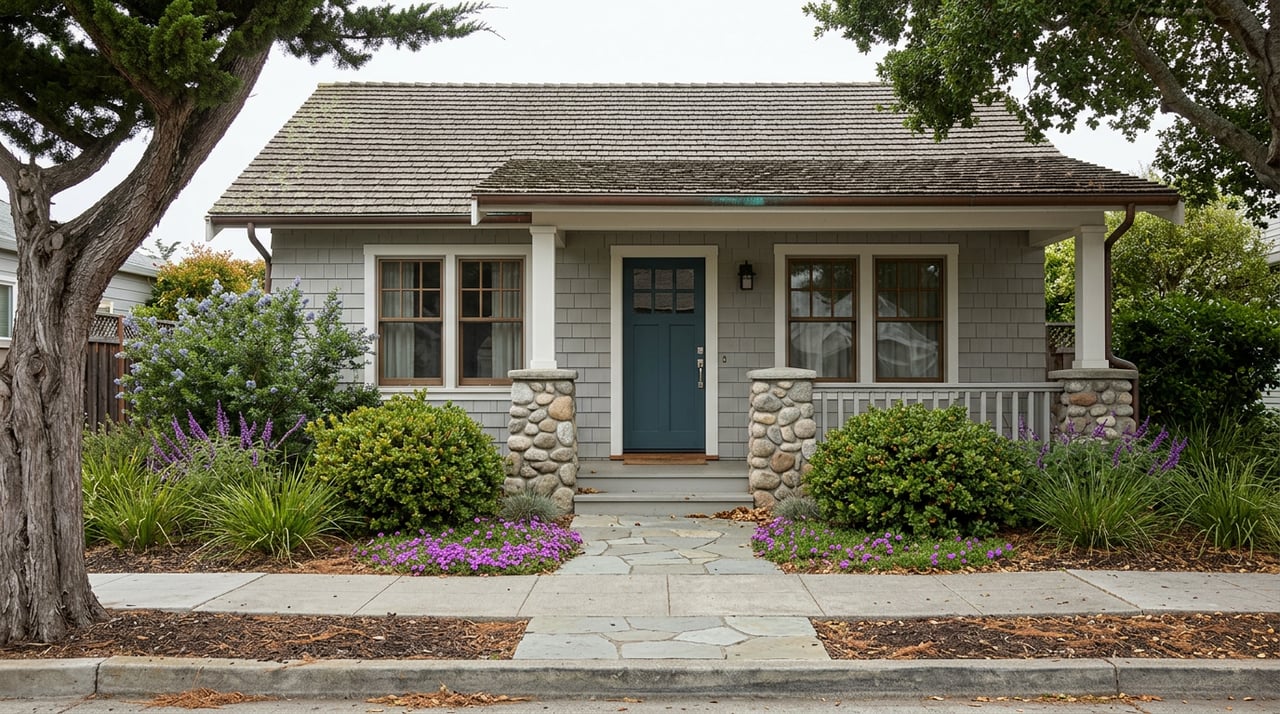
Trying to choose between Pacific Grove and Carmel-by-the-Sea? The right decision shapes your budget, daily rhythm, and long-term return. Each market offers coastal charm, strong walkability in the village core, and access to world-class scenery, yet they differ sharply on price, home size, and short-term rental rules. In this guide, you will see how the two markets compare so you can align your purchase with your goals. Let’s dive in.
Market snapshot: prices and pace
Pacific Grove’s recent snapshots show a median sale price near $1.45 million and a median price per square foot around $955. Carmel’s market typically reads higher, with recent medians often in the $2.0–$2.3 million range. A fast rule of thumb: Pacific Grove tends to print ~$900–1,000 per sq ft, while Carmel often comes in around ~$2,000 per sq ft.
Velocity also differs. Pacific Grove has shown low inventory with faster sales in early 2026, while Carmel’s smaller sales counts and higher price points create more variable timelines. Because Carmel has few closings each month, a single high-value sale can swing the median. Use these trends as a framework, then confirm day-of-search numbers with local data.
What your money buys
Pacific Grove homes and settings
Pacific Grove’s housing stock mixes Victorian cottages, Craftsman and bungalow styles, midcentury homes, and small in-town lots near Old Town. You will also find larger properties toward forested pockets. Popular micro-areas include Old Town and Lighthouse Avenue, Lovers Point and Asilomar, and Pacific Grove Acres. Each balances walkability, lot size, and price differently.
In the $1.0–$1.6 million band, buyers commonly find updated 2 to 3-bedroom single-family homes or cottages in town. Thanks to the price-per-foot advantage, you often gain more interior space and larger lots here compared to Carmel at the same budget.
Carmel-by-the-Sea homes and settings
Carmel is known for storybook cottages, compact lots, and a prized village-center lifestyle. Inventory is limited, and the market is price-dense because of location, architecture, and the village feel. Many dwellings are smaller yet command higher prices per square foot.
With a Pacific Grove-sized budget, expect to consider smaller or more inland cottages, condos, or a tighter set of tradeoffs in Carmel. Because annual transactions are few, line-by-line comps and property-level analysis matter more than marketwide averages when you narrow to a specific street or pocket.
Walkability and daily life
Village cores and everyday errands
Both towns offer excellent walkability in their central areas. Pacific Grove scores very well for walking access in town, and Carmel’s core is also highly pedestrian friendly. For a quick reference, explore Pacific Grove’s walk profile on Walk Score’s city page. For a sense of Carmel’s iconic strolling lifestyle, review the village walking highlights.
Lifestyle texture and amenities
Pacific Grove feels residential and relaxed, with easy access to Lovers Point, Asilomar’s beaches and boardwalk, neighborhood parks, and the Monarch butterfly groves. Many residents enjoy short bike rides or quick drives to the Monterey Bay Aquarium and Cannery Row. The scale here favors a community rhythm, with restaurants and coffee shops anchored by daily-life conveniences.
Carmel’s village centers on Ocean Avenue, lined with galleries, boutiques, tasting rooms, and restaurants, with the beach at the foot of town. If daily pedestrian life in a compact, boutique setting is your top priority, the core of Carmel delivers that experience in a very concentrated footprint. Pacific Grove’s downtown also supports a car-light lifestyle, but the vibe is more residential and neighborhood oriented.
Schools and enrollment
Pacific Grove Unified School District
Pacific Grove is served by the Pacific Grove Unified School District, with neighborhood elementary schools, a middle school, and Pacific Grove High School. Families should confirm exact attendance boundaries and policies directly with PGUSD. Many homes are close to schools because of the city’s compact geography.
Carmel Unified School District
Carmel-by-the-Sea is served by the Carmel Unified School District, which also covers surrounding areas like Carmel Valley and parts of Big Sur. The district operates several elementary schools, a middle school, and Carmel High. Verify address-specific enrollment and residency requirements with CUSD’s student services. Some families also evaluate private school options as part of their plan.
Short-term rentals: rules that matter
Short-term rental policies differ sharply across the region. These rules can significantly impact lifestyle, investment planning, and resale.
Pacific Grove rules and taxes
Pacific Grove historically issued short-term rental licenses with caps and density limits, later implementing a lottery process and voter-approved phase-outs in certain residential zones. The legal and administrative history is summarized in the appellate decision Hobbs v. City of Pacific Grove. The city enforces its rules, and advertising unlicensed rentals can carry penalties.
Pacific Grove also levies a 12% Transient Occupancy Tax (TOT) on stays. Operators must register and remit TOT according to the municipal code. Platform collection practices vary, so owners should confirm their responsibilities with the city.
Carmel-by-the-Sea rules and taxes
Within Carmel city limits, the transient rental of single-family homes for stays under 30 days is prohibited in the R-1 district, with only narrow exceptions in certain commercial or multi-unit zones. Advertising unpermitted transient rentals is not allowed. In practice, this makes new STR investment inside the village largely impractical. Review the city’s short-term rental information for details.
Carmel’s local TOT rate is 10%, an important component of city revenue that supports ongoing enforcement. You can see the city’s TOT reference in public records via a council agenda document.
Unincorporated county areas
Many properties commonly referred to as “Carmel” are actually in unincorporated Monterey County, including Pebble Beach, Del Monte Forest, and Carmel Valley. The county maintains its own STR permit structure, caps, and timelines that differ from the cities. Before assuming rental income, verify whether a property is inside city limits or under county jurisdiction, then check the county’s permit center guidance.
Buyer profiles and tradeoffs
- Choose Pacific Grove if you want strong walkability, a neighborhood feel, and more interior space for the dollar. You will find a broader mix of single-family homes and cottages that fit typical family layouts in the $1.0–$1.6 million band.
- Choose Carmel if your top priority is an iconic village lifestyle with galleries, restaurants, and a compact, beach-adjacent core. Expect higher prices per square foot and smaller footprints at comparable budgets.
- If STR income is part of your plan, treat every address as a case study. In-city Carmel is mostly closed to new short-term rentals in single-family zones, while Pacific Grove has caps and strict enforcement. County addresses follow a separate system.
How to choose with confidence
Use these steps to align your search with your goals:
- Clarify budget and size targets
- Decide your ideal and minimum acceptable interior square footage. Apply the quick ratio: Pacific Grove ≈ $900–1,000/sq ft vs. Carmel ≈ $2,000+/sq ft to estimate size at budget.
- Map your daily life
- List your top three lifestyle priorities, such as village walkability, beach access, or proximity to parks and dining. Visit each town at different times to test parking, foot traffic, and noise levels.
- Confirm school needs early
- If schools matter, contact PGUSD or CUSD to verify boundaries and enrollment timelines for any short list of addresses.
- Verify STR feasibility before you offer
- If rental revenue is important, check parcel-level eligibility with the relevant city or county. Review Carmel’s STR policy overview, Pacific Grove’s TOT rules in the municipal code, and Monterey County’s permit center.
- Compare like for like
- Line up two to three sample homes per area at the same budget, then compare interior space, lot size, updates, street feel, and access to daily needs. The contrast becomes clear when you evaluate similar budgets side by side.
When you are ready to refine the numbers and preview properties, a local, data-forward advisor can help you weigh micro-neighborhoods, walkability tradeoffs, and parcel-specific rules. For discreet guidance and a tailored plan, connect with the team at E&V Carmel Shop.
FAQs
What is the current median price in Pacific Grove?
- Recent snapshots show a median sale price near $1.45 million, with a typical price per square foot around $955 in early 2026.
How does price per square foot compare between towns?
- Pacific Grove often ranges ~$900–1,000 per sq ft, while Carmel commonly trends near ~$2,000 per sq ft, so you usually get more space in Pacific Grove for the same budget.
Can I operate a short-term rental in Carmel-by-the-Sea?
- In-city Carmel prohibits rentals under 30 days in single-family zones, with limited exceptions; review the city’s short-term rental information before planning STR income.
Are both town centers walkable for daily errands?
- Yes, both cores are very walkable; Pacific Grove shows strong scores on Walk Score, and Carmel’s village is compact with shops, galleries, and dining within blocks of many homes.