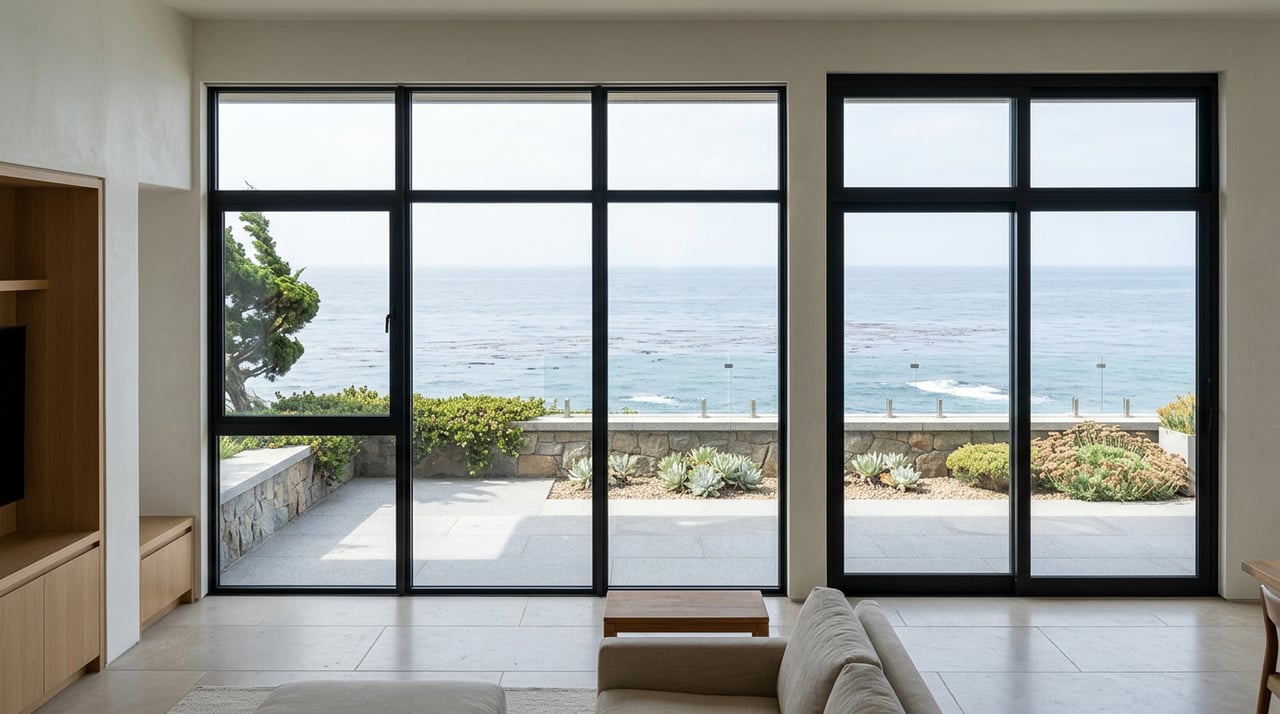
What draws you to Country Club West — morning walks along 17‑Mile Drive, quick cart rides to MPCC, or the simple joy of hearing waves crash near Bird Rock? If you are weighing a Pebble Beach purchase, you likely want an easy, golf‑and‑coast lifestyle without the upkeep of a sprawling estate. This guide helps you decide if Country Club West fits your vision by breaking down location, lot and home types, governance and permits, and the due‑diligence steps that protect your investment. Let’s dive in.
Country Club West at a glance
Where it sits
Country Club West anchors the western side of the Del Monte Forest around the Monterey Peninsula Country Club’s Shore and Dunes courses and the oceanfront stretches of 17‑Mile Drive between Spanish Bay and the Spyglass/Cypress Point areas. The Del Monte Forest Land Use Plan describes this planning area and its blend of golf and resort uses, which shape everyday life here. You feel close to the shoreline, yet tucked into a quiet residential pocket of Pebble Beach. The Del Monte Forest Land Use Plan outlines the Country Club planning area and its golf‑resort setting.
Access along 17‑Mile Drive
17‑Mile Drive is privately owned and maintained by Pebble Beach Company. County coastal policies aim to balance public shoreline access with a regulated vehicle gate system. Pedestrians and bicyclists may enter without a vehicle fee, and vehicles are subject to a gate fee set and managed under policy. If frequent guest access matters to you, confirm current gate pass practices and costs before you buy. You can review how public access and gate limits are treated in the Del Monte Forest coastal plan.
Homes and lots you’ll find
Typical sizes and layout
Country Club West offers many modest‑to‑medium single‑family lots, often in the range of roughly 0.2 to 0.5 acre, with some larger parcels mixed in. Listings show a spread of original mid‑century homes and expanded or replaced residences as redevelopment continues. Use current MLS and assessor records for exact parcel size and any recorded easements or setbacks that affect how you can use the property.
Architecture and age
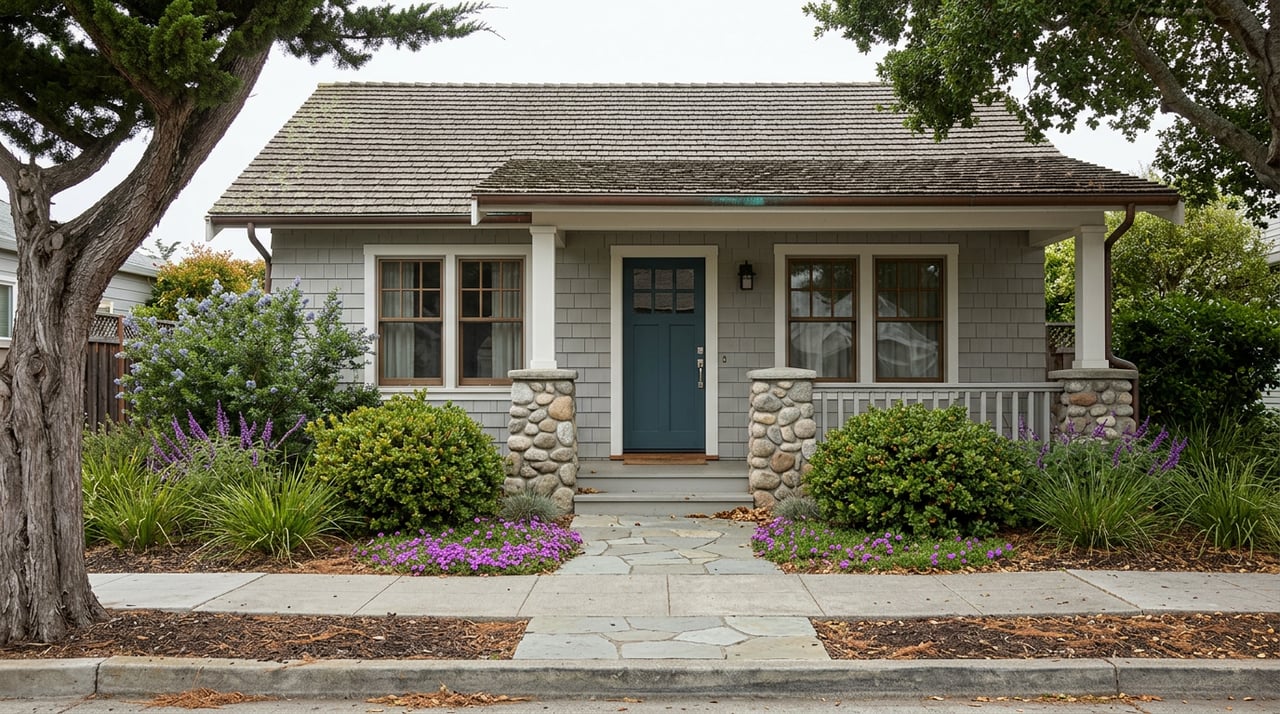
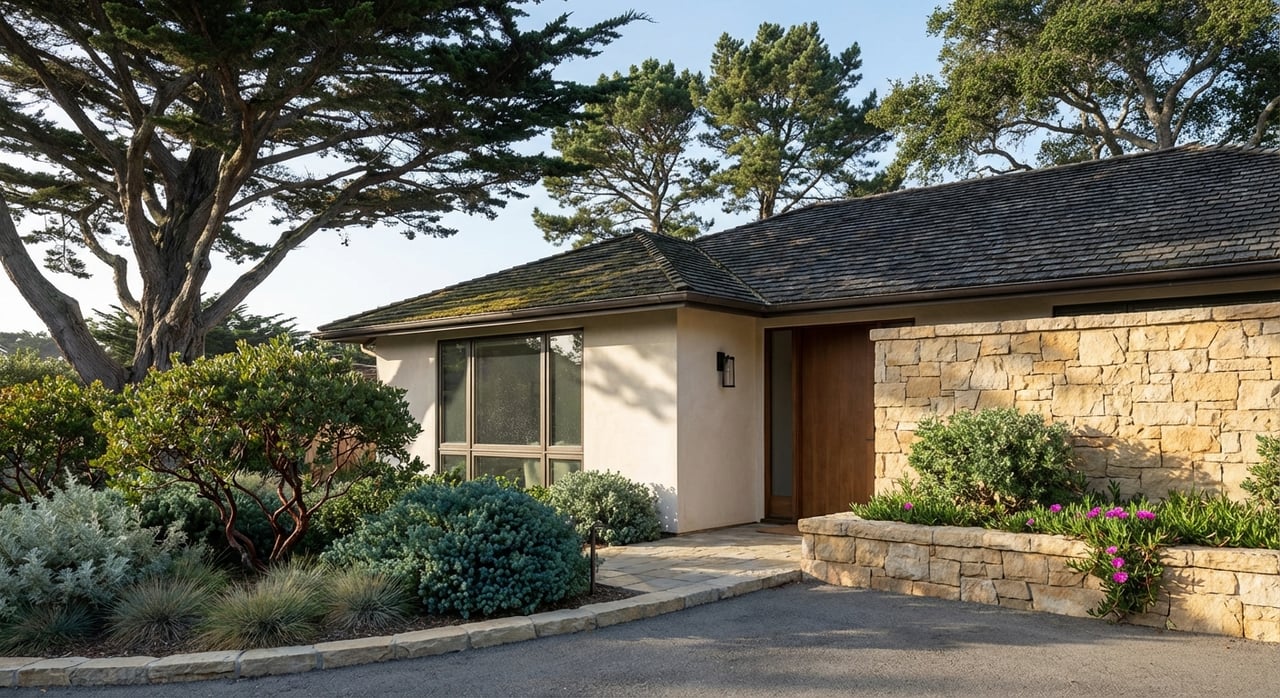
You will see Spanish Colonial and Mediterranean influences, Monterey/Monterey Colonial, Craftsman, Ranch, and newer coastal‑contemporary designs. Many homes date from the 1920s through the 1960s, with waves of renovation and infill since. Historic covenants and local review have long encouraged Spanish‑Mediterranean vocabulary, so plan on a straightforward design‑review step for major exterior changes. County and private review processes are part of ownership here, as noted in local policy records.
Golf, ocean, and everyday lifestyle
MPCC proximity
If walking to MPCC’s clubhouse or living along a fairway is a must, Country Club West is a top fit. Many parcels border or sit near the Dunes and Shore courses, and select elevated lots capture partial ocean views. For a sense of the neighborhood’s golf context, see the official overview of 17‑Mile Drive courses.
Privacy trade‑offs
Compared with interior forest estates, Country Club West tends to feel more walkable with smaller lots and convenient access to golf and shoreline viewpoints. If you want absolute seclusion or very large acreage, you may compare it with inland Pebble Beach pockets or select Cypress Point and Spanish Bay fronts. Many buyers accept a bit less acreage in exchange for shorter walks to MPCC and 17‑Mile Drive scenery.
Governance and permits
Who manages what
Understanding who does what will save you time during escrow:
- Pebble Beach Company manages resort infrastructure and the 17‑Mile Drive road system and administers private covenants and design review on many lots.
- Del Monte Forest Conservancy holds conservation and scenic easements across parts of the Forest. Easements can limit development or vegetation changes. Learn more about their role and holdings on the Del Monte Forest Conservancy site.
- Del Monte Forest Property Owners (DMFPO) is a resident resource that summarizes local rules, provides ARB contacts, and answers common questions about construction hours and related policies. Review the DMFPO FAQs for practical contacts and summaries.
- Pebble Beach Community Services District (PBCSD) provides fire protection and EMS, wastewater collection and treatment, recycled water distribution, and solid‑waste services. Confirm sewer status and any connection requirements directly with PBCSD.
Design review and CC&Rs
Major exterior work almost always goes through both county permitting and the private Architectural Review Board (ARB) process set by Pebble Beach Company’s covenants, conditions and restrictions. Expect plan checks for remodels, tree removal, and construction logistics. Ask for the full CC&Rs, any ARB guidelines, prior approvals, and correspondence so you understand what has been permitted and what may be required for future changes. The Del Monte Forest Land Use Plan and county planning pages provide context on overlapping permit layers, including coastal permits where applicable. Review the county’s background materials on the Pebble Beach Company’s Del Monte Forest planning framework on the County of Monterey site.
Conservation easements
Conservation or scenic easements are common in the Forest and may limit grading, tree removal, building envelope, or fencing. Always obtain and read any recorded easement that encumbers the lot. The Conservancy explains how easements work and why they matter to owners on its easements page.
Utilities, fire, and services
Sewer and water
Parcels in Pebble Beach may be connected to public sewer through PBCSD or have a septic history. Confirm connection status, capacity, and any permits needed for a new or upgraded connection. Ask the seller for recent wastewater bills or PBCSD correspondence. Water allocation can also be a planning factor for certain projects, so verify entitlements early with your agent and title team.
Wildfire and defensible space
Pebble Beach is a forested community, so compliance with defensible‑space rules and fuel‑reduction programs is essential for safety and insurance. PBCSD manages fire prevention and home‑hardening programs for the area. Your inspection list should include a compliance check and documentation of any recent vegetation management. Visit PBCSD for an overview of local fire and EMS services.
Pricing and value context
As a resort‑coastal market, Pebble Beach sits at a very high median price point compared with most U.S. areas. A late‑2025 report placed the Pebble Beach median around 4.47 million dollars for the ZIP as a whole, while Country Club West often trends lower than the broader ZIP due to more modest lot sizes and a larger share of older homes. Values shift by micro‑location, view corridor, golf frontage, and renovation level. For a specific home, pull live MLS comparables on the same streets and confirm any premium drivers like oceanfront exposure, historic status, or rare privacy.
What to check before you buy
Key documents
Request and review these early in escrow:
- Preliminary Title Report with all recorded easements, CC&Rs, and any open violations.
- Full CC&Rs, ARB guidelines, ARB correspondence, and prior approvals or denials. The DMFPO FAQs list ARB contacts and summarize local policies.
- County permit history for additions, pools, mechanical upgrades, and whether coastal permits were required or issued. The County’s Pebble Beach planning page explains the Del Monte Forest program and related approvals here.
Hazards and environment
California requires robust seller disclosures. Use the Natural Hazard Disclosure and Transfer Disclosure Statement as a starting point, then verify with specialists as needed. The disclosure framework calls out FEMA flood status, Very High Fire Hazard Severity Zones, seismic hazards, and other mapped risks. You can read the statutory framework summarized in AB 1289 on LegiScan. For coastal parcels, review bluff stability, coastal erosion, and shoreline policies referenced in the Del Monte Forest Land Use Plan. Regional studies also highlight long‑term sea‑level rise and shoreline change, which you should factor into due‑diligence for bluff‑edge or low‑lying lots. See the Monterey Bay context on Coastal Resilience.
Inspections to order
Line up qualified inspectors who understand golf‑coastal homes:
- General home inspection and a structural engineer review for older foundations or hillside conditions.
- Geotechnical report for bluff‑adjacent or sloped lots to evaluate setbacks and stability.
- Drainage and stormwater assessment for retaining walls, down‑slope impacts, and dune‑coastal runoff.
- Termite and wood‑destroying organism inspection, plus a building‑envelope review for salt‑air corrosion.
- Sewer scope or utility verification to confirm PBCSD connection and any required permits. Contact PBCSD for system details and connection requirements.
- Wildfire and defensible‑space compliance review with documentation of recent fuel reduction work.
- Boundary and topographic survey to confirm setbacks, easements, and the structure’s relationship to 17‑Mile Drive and neighboring parcels.
Smart questions to ask
Use direct wording to surface key facts:
- “Please provide the full CC&Rs, ARB guidelines, ARB correspondence, and the property’s permit history.”
- “Has any bluff, slope, or geotechnical study been completed? Please share the report and any required mitigation.”
- “Is the parcel encumbered by a conservation or scenic easement? Please provide the recorded documents and any owner obligations.”
- “Is the property on public sewer through PBCSD or does it have a septic history? Please include recent wastewater bills or PBCSD correspondence.”
Insurance and long‑term costs
Coastal and forest‑edge homes can face higher premiums or limited carrier options for wildfire, flood, or specialty coverage. Get an insurance market check early in your contingency period. Factor in ongoing costs for defensible‑space work, exterior maintenance in a salt‑air environment, and any road or gate fees that apply to your parcel.
Red flags to watch
Flag these items for pricing adjustments or extended contingencies:
- Unpermitted structural work or major additions.
- Recorded conservation or scenic easements that limit your intended remodel.
- Missing geotechnical studies for bluff‑influenced sites where retreat or instability is visible.
- Repeated termite or wood‑rot findings paired with deferred maintenance.
- Parcels mapped in Very High Fire Hazard Severity Zones without documented fuel‑reduction compliance.
How to choose the right home
Start with your must‑haves: golf frontage or golf walkability, ocean outlooks, and the amount of privacy you prefer. Next, weigh lot size and architecture against your remodel appetite and the ARB process. Finally, layer in the practicals: sewer status, easements, hazard profile, and ongoing maintenance. A clear checklist and the right local advisors will help you secure the Coast‑and‑Course lifestyle you want with confidence.
When you are ready to take the next step, our team pairs neighborhood‑level intelligence with a discreet, concierge approach. We will map your goals to the right micro‑locations, surface parcel‑specific risks and opportunities, and guide you from valuation through closing. Connect with the E&V Carmel Shop to schedule a consultation.
FAQs
What is Country Club West in Pebble Beach?
- It is the western Del Monte Forest neighborhood around MPCC’s Shore and Dunes courses and the ocean stretches of 17‑Mile Drive, as described in the area’s coastal land use plan.
How does 17‑Mile Drive access work for owners and guests?
- Pebble Beach Company manages 17‑Mile Drive with a regulated vehicle gate fee; pedestrians and bicyclists are generally admitted without a vehicle fee, so confirm current guest‑pass rules before buying.
Are remodels subject to special review in Pebble Beach?
- Yes. Most exterior work requires county permits plus private ARB review under Pebble Beach Company’s CC&Rs; ask the seller for prior approvals and correspondence.
What inspections matter most for a golf‑coastal home?
- Beyond a general inspection, prioritize structural and geotechnical reviews, drainage, termite/WDO, building‑envelope corrosion, sewer connection, and defensible‑space compliance.
How do sewer and utilities work in Country Club West?
- PBCSD provides wastewater services for Pebble Beach; verify whether the parcel is on public sewer, any connection requirements, and recent bills or correspondence.
What drives price differences within Pebble Beach?
- Premiums reflect oceanfront exposure, estate‑size acreage, unobstructed views, proximity to resort cores, privacy, and historic significance; Country Club West often trades some acreage for walkability to MPCC and shoreline viewpoints.